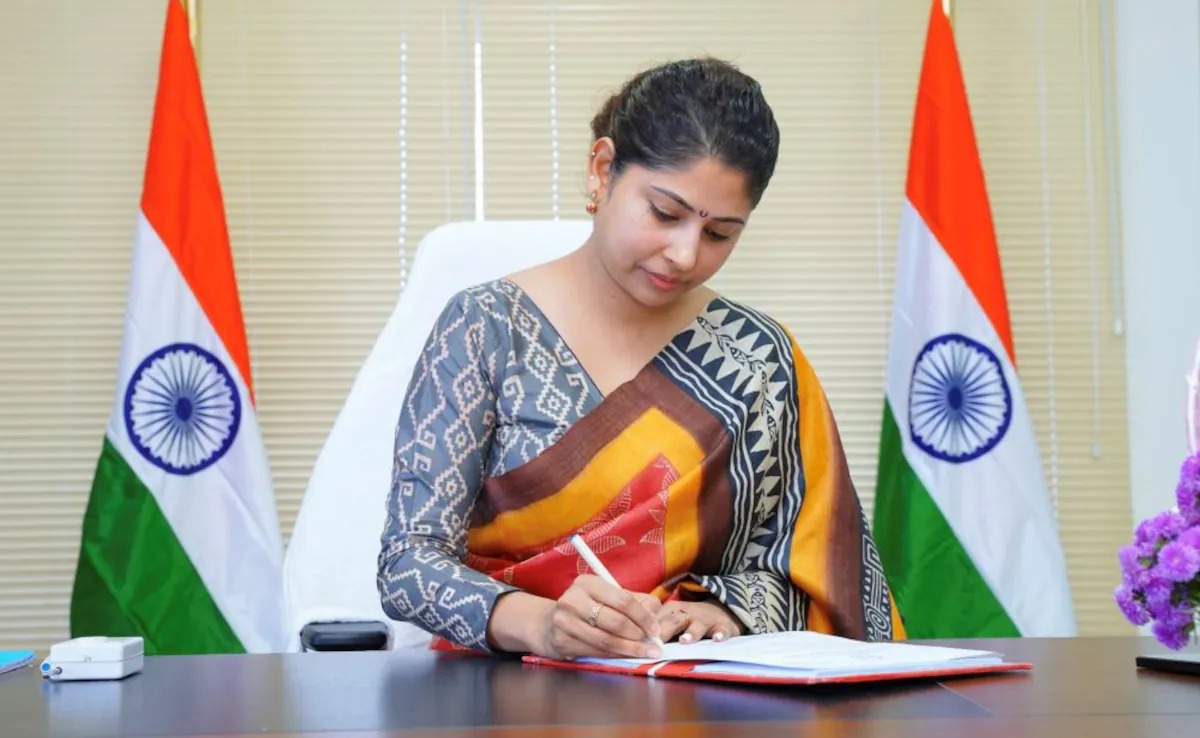
𝐒𝐦𝐢𝐭𝐚 𝐒𝐚𝐛𝐡𝐚𝐫𝐰𝐚𝐥 𝐢𝐬 𝐰𝐢𝐝𝐞𝐥𝐲 𝐫𝐞𝐠𝐚𝐫𝐝𝐞𝐝 𝐚𝐬 𝐨𝐧𝐞 𝐨𝐟 𝐈𝐧𝐝𝐢𝐚’𝐬 𝐦𝐨𝐬𝐭 𝐩𝐫𝐨𝐦𝐢𝐧𝐞𝐧𝐭 𝐈𝐀𝐒 𝐨𝐟𝐟𝐢𝐜𝐞𝐫𝐬, 𝐤𝐧𝐨𝐰𝐧 𝐟𝐨𝐫 𝐡𝐞𝐫 𝐚𝐝𝐦𝐢𝐧𝐢𝐬𝐭𝐫𝐚𝐭𝐢𝐯𝐞 𝐢𝐧𝐧𝐨𝐯𝐚𝐭𝐢𝐨𝐧, 𝐩𝐞𝐨𝐩𝐥𝐞-𝐜𝐞𝐧𝐭𝐫𝐢𝐜 𝐠𝐨𝐯𝐞𝐫𝐧𝐚𝐧𝐜𝐞, 𝐚𝐧𝐝 𝐩𝐚𝐭𝐡𝐛𝐫𝐞𝐚𝐤𝐢𝐧𝐠 𝐚𝐜𝐡𝐢𝐞𝐯𝐞𝐦𝐞𝐧𝐭𝐬 𝐢𝐧 𝐩𝐮𝐛𝐥𝐢𝐜 𝐬𝐞𝐫𝐯𝐢𝐜𝐞.
𝐁𝐨𝐫𝐧 𝐢𝐧 𝟏𝟗𝟕𝟕 𝐢𝐧 𝐃𝐚𝐫𝐣𝐞𝐞𝐥𝐢𝐧𝐠 𝐭𝐨 𝐚𝐧 𝐀𝐫𝐦𝐲 𝐟𝐚𝐦𝐢𝐥𝐲, 𝐒𝐚𝐛𝐡𝐚𝐫𝐰𝐚𝐥 𝐬𝐩𝐞𝐧𝐭 𝐡𝐞𝐫 𝐞𝐚𝐫𝐥𝐲 𝐲𝐞𝐚𝐫𝐬 𝐚𝐜𝐫𝐨𝐬𝐬 𝐝𝐢𝐟𝐟𝐞𝐫𝐞𝐧𝐭 𝐜𝐢𝐭𝐢𝐞𝐬 𝐝𝐮𝐞 𝐭𝐨 𝐡𝐞𝐫 𝐟𝐚𝐭𝐡𝐞𝐫’𝐬 𝐩𝐨𝐬𝐭𝐢𝐧𝐠𝐬. 𝐇𝐞𝐫 𝐝𝐢𝐬𝐜𝐢𝐩𝐥𝐢𝐧𝐞𝐝 𝐮𝐩𝐛𝐫𝐢𝐧𝐠𝐢𝐧𝐠 𝐚𝐧𝐝 𝐚𝐜𝐚𝐝𝐞𝐦𝐢𝐜 𝐛𝐫𝐢𝐥𝐥𝐢𝐚𝐧𝐜𝐞 𝐛𝐞𝐜𝐚𝐦𝐞 𝐞𝐯𝐢𝐝𝐞𝐧𝐭 𝐞𝐚𝐫𝐥𝐲 𝐰𝐡𝐞𝐧 𝐬𝐡𝐞 𝐜𝐥𝐞𝐚𝐫𝐞𝐝 𝐭𝐡𝐞 𝐔𝐏𝐒𝐂 𝐂𝐢𝐯𝐢𝐥 𝐒𝐞𝐫𝐯𝐢𝐜𝐞𝐬 𝐄𝐱𝐚𝐦𝐢𝐧𝐚𝐭𝐢𝐨𝐧 𝐢𝐧 𝟐𝟎𝟎𝟎 𝐚𝐭 𝐭𝐡𝐞 𝐚𝐠𝐞 𝐨𝐟 𝐣𝐮𝐬𝐭 𝟐𝟐, 𝐬𝐞𝐜𝐮𝐫𝐢𝐧𝐠 𝐚𝐧 𝐢𝐦𝐩𝐫𝐞𝐬𝐬𝐢𝐯𝐞 𝐀𝐥𝐥 𝐈𝐧𝐝𝐢𝐚 𝐑𝐚𝐧𝐤 𝟒.
Her administrative career gained attention during her postings in the then undivided Andhra Pradesh, particularly in districts such as Adilabad and Karimnagar. It was here that she earned recognition for her work in healthcare and grassroots governance.
One of her most noted initiatives was the “Ammalalana” programme in Karimnagar, which focused on increasing institutional deliveries and improving maternal and child healthcare. The initiative significantly helped in reducing maternal and infant mortality rates and later became a model for broader public health interventions under the National Rural Health Mission (NRHM).
Sabharwal also emerged as one of the early administrators to actively integrate technology into governance. She introduced digital monitoring systems for schools and used video-based supervision mechanisms to improve accountability in public healthcare delivery. At a time when technology-driven governance was still evolving in India, her approach was considered both innovative and result-oriented.
Apart from welfare initiatives, she also focused on improving civic infrastructure by combining government resources with public-private participation models for better roads, public utilities, and local services.
In a landmark achievement, she became the first woman IAS officer in India to be appointed to a Chief Minister’s Office (CMO), breaking a significant barrier in higher administrative leadership. Her long tenure in the Telangana CMO further reflected the trust and confidence reposed in her administrative abilities.
Over the years, Sabharwal has built a reputation as an officer known for efficiency, accountability, and direct public engagement. Her administrative style has consistently reflected a balance between technology-driven governance and grassroots welfare delivery.
Her often-quoted belief “Everything becomes relevant once you put your heart into it” is seen as a reflection of her approach towards public service. Whether handling district-level assignments or high-level policy matters, she has remained focused on delivering impactful governance.
The trajectory of her career continues to be viewed as an example of how committed civil servants can influence policy, improve governance systems, and create long-term impact through innovation and public-oriented administration.