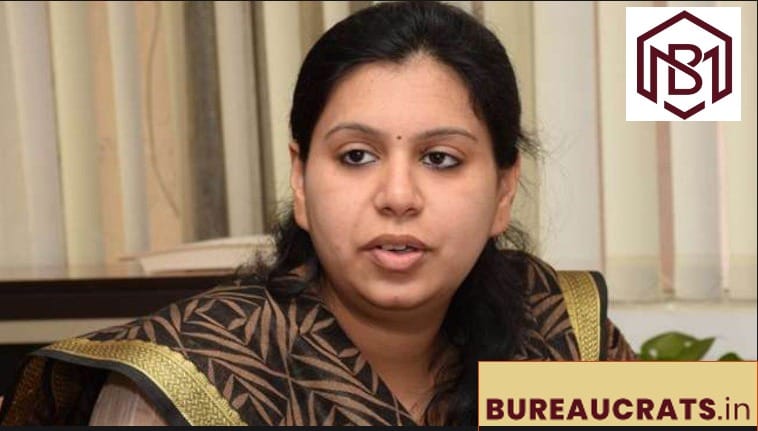
It’s official. The Rajasthan Government has appointed V Srinivas, IAS (RJ;1989), as the new Chief Secretary and he is joining the office today!
Returning from central deputation, he will serve until his retirement in September 2026 and also hold additional charge of Rajasthan State Mines and Minerals Ltd and Principal Resident Commissioner in New Delhi.
Till October 2025, V. Srinivas, a 1989-batch Indian Administrative Service (IAS) officer from the Rajasthan cadre, served as the Secretary, Department of Administrative Reforms and Public Grievances (DARPG) and Secretary, Department of Pensions and Pensioners’ Welfare (DoPPW) under the Ministry of Personnel, Public Grievances and Pensions.
His administrative journey, spanning over three decades, reflects a rare balance of field experience, fiscal management, policy formulation, and international engagement. His current posting marks the culmination of a long career dedicated to reform-driven governance and institutional strengthening. In addition to these roles, he also served as Additional Secretary in DARPG from 2018 to 2021 and Special Secretary, DARPG in 2021, before taking over as Secretary, DARPG and DoPPW from 2021 to 2025.
After joining the IAS in 1989, Srinivas began his administrative career with field assignments that grounded him in district governance. Between 1991 and 1999, he served as Sub-Divisional Officer, Additional Commissioner (IGNP Project, Bikaner), Director of Watershed and Soil Conservation, and later as District Collector and Magistrate in Pali and Jodhpur. These early postings gave him extensive exposure to land revenue management, water resource planning, and local development, areas central to Rajasthan’s administrative and agrarian landscape. During this period, he received multiple recognitions including the National Productivity Council Awards for Highest Productivity in Rainfed Agriculture in 1995 and 1997 and the Certificate for Outstanding Public Service from the Government of Rajasthan in 1998.
As District Magistrate, he earned recognition for his pragmatic and structured approach to district administration, particularly in revenue and welfare programs. His experience during this phase would later shape his policy outlook on administrative decentralization and citizen service delivery.
From 1999 to 2009, Srinivas transitioned into roles of increasing policy responsibility. His tenure in the Finance Department of Rajasthan was followed by central postings that deepened his engagement with governance at the national level.

Between 2000 and 2003, he worked in the Ministries of Petroleum and Natural Gas, External Affairs, and Finance, serving as Deputy Secretary and Private Secretary to Union Ministers. These assignments exposed him to both domestic and global aspects of fiscal management and foreign policy.
His foreign deputation to the International Monetary Fund (IMF) in Washington, D.C., from 2003 to 2006, as Adviser to the Executive Director, marked a major milestone in his career. During this tenure, he contributed to discussions on international financial governance and macroeconomic stability, an experience that later proved valuable in his policy work on administrative and fiscal reforms back home. This period also reflects his first major multilateral engagement, which he would later extend through roles with the International Cotton Advisory Committee (2010–2013) and the International Institute of Administrative Sciences (IIAS), where he served from 2018 to 2025 and was elected as the first Indian President.
Upon returning to India, Srinivas took charge of key state-level assignments, including as Secretary in the Planning Department, Mission Director for the National Rural Health Mission (NRHM), and Secretary for Science and Technology in Rajasthan. These roles between 2007 and 2010 underlined his ability to bridge field implementation with policy design, an essential trait for modern governance leadership.
Between 2010 and 2014, Srinivas held important assignments as Joint Secretary in the Ministry of Textiles (2010–2013) and later as Joint Secretary in the Ministry of Culture (2013–2014). His work during this period centered on institutional modernization, project monitoring, and sectoral development. He also served at the International Cotton Advisory Committee from 2010 to 2013 and was associated with the SAARC Culture Centre and the Commonwealth Heads of Public Service and Secretaries to Cabinet, reflecting an expanding international engagement that complemented his domestic responsibilities.
At the National Archives of India, where he served as Director General (2013–2014), he oversaw modernization efforts aimed at preserving historical records through digitization, an early indicator of his sustained interest in digital transformation and governance innovation. His tenure coincided with broader government efforts to integrate technology into administrative processes.
From 2014 to 2018, Srinivas’s roles evolved to include both central and state-level leadership. As Deputy Director (Administration) at AIIMS from 2014 to 2017, he managed institutional reforms, staffing, and financial planning for India’s premier medical institute. For his contributions, he received the AIIMS Leadership Excellence Award in 2017 as well as the Kaya Kalp (Clean Hospital) Awards in 2016 and 2017.
He later returned to Rajasthan as Chairman of the Tax Board (2017–18) and subsequently the Board of Revenue, Ajmer (2017–18), where he focused on improving fiscal administration, enhancing transparency in revenue processes, and strengthening adjudicatory efficiency. These positions, both at the Additional Secretary level, reaffirmed his grounding in core governance functions, finance, public accountability, and legal frameworks. He also earned the Certificate for Outstanding Public Service from the Government of Rajasthan in 2019.

Central Deputation and Reform-Focused Leadership
In December 2018, Srinivas began his long central deputation that continues to the present day, with his tenure extending until August 2026. His current responsibilities as Secretary, DARPG and Secretary, DoPPW represent the apex of his administrative career, placing him at the heart of India’s governance reform architecture. During his central deputation, he also held additional charges as Secretary, Department of Personnel and Training (DoPT) and Secretary, Ministry of Development of North Eastern Region (DoNER), each reflecting the government’s trust in his administrative capabilities. He was also a member of the Deregulation Task Force from 2024 to 2025.
At DARPG, he has been pivotal in institutionalizing administrative reforms through digital governance initiatives, grievance redressal modernization, and the promotion of good governance practices across ministries and states. He played a leading role in developing Special Campaign 5.0, a national initiative aimed at improving workplace efficiency, cleanliness, and records management. His contributions were recognized with the Rajbhasha Kirti Puraskar in 2024 and 2025.
As head of DoPPW, Srinivas has focused on streamlining pension delivery systems, expanding digital access for pensioners, and ensuring transparent grievance resolution. His leadership in these twin departments underscores a governance philosophy rooted in efficiency, accountability, and citizen welfare.
He has also served as Director General of the National Centre for Good Governance (NCGG) from 2020 to 2024, where he supervised capacity-building programs for civil servants from India and abroad, strengthening the institutional foundation for administrative excellence.
Srinivas’s expertise has also been recognized internationally. In June 2025, he was elected President of the International Institute of Administrative Sciences (IIAS), Brussels, becoming the first Indian to hold this prestigious position. His election reflects India’s growing influence in global administrative discourse and his personal standing in the field of governance reforms.
He has also held additional charges as Secretary, Department of Personnel and Training (DoPT) and Secretary, Ministry of Development of North Eastern Region (DoNER), brief but significant responsibilities that highlight his administrative versatility and trust within the government system.
Education and Training
An alumnus of Osmania University, Hyderabad, Srinivas holds both B.Tech and M.Tech degrees in Chemical Engineering, each with First Class with Distinction. His academic rigor has been complemented by advanced training in institutions such as the Indian Institute of Management, Bangalore, and the IMF Institute, Washington D.C., where he attended specialized programs on negotiation, economic policy, and leadership.
From field administration in Rajasthan to leading India’s administrative reform agenda, V. Srinivas’s career exemplifies the evolution of the Indian bureaucracy toward greater transparency, digitization, and citizen engagement. His trajectory reflects a rare blend of field experience, policy innovation, and international exposure, attributes that have shaped his reform-centric approach to public administration.
As he continues his tenure at the helm of DARPG and DoPPW, Srinivas stands as part of a generation of civil servants who bridge traditional bureaucratic rigor with the demands of modern governance, where efficiency, data-driven decision-making, and accountability define the future of India’s public institutions.